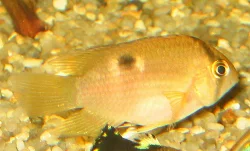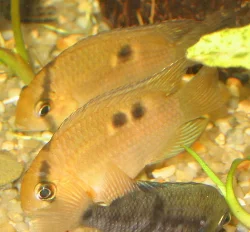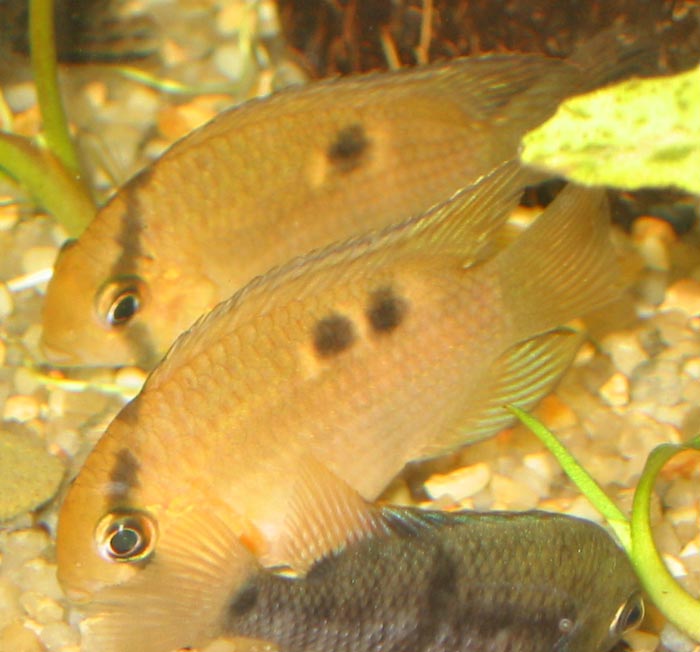
The Keyhole Cichlid (*Cleithracara maronii*) is a true staple in the aquarium hobby, beloved for its exceptionally peaceful nature and the distinctive "keyhole" marking on its flanks that gives the species its common name.
Natural Habitat and Tank Setup
Originating from the river basins of Guyana, Suriname, and French Guiana, C. maronii typically inhabits slow-moving creeks and rivers characterized by tea-colored blackwater, abundant driftwood, and leaf litter. In the home aquarium, they appreciate plenty of hiding spots among roots and hardy plants. Being somewhat shy, they thrive under dimmed lighting and on darker substrates, which helps bring out their subtle yet beautiful coloration.
Behavior and Social Needs
As an aquarist, you will quickly find that this is one of the most well-behaved cichlids available. I purchased my group in Frederikshavn, and my initial impression was of a shy fish with muted colors. Unlike many other cichlids, they rarely dig, making them excellent candidates for planted tanks. They are incredibly peaceful and can be housed with almost any community fish, from small tetras to other non-aggressive cichlids. Interestingly, when stressed, they display a mottled camouflage pattern as a natural defense mechanism.
Breeding and Pair Bonding
While I haven't personally witnessed a spawning event in my own tanks yet, the breeding strategy is well-documented. The most successful approach is to keep a group of 4 to 6 juveniles and allow them to pair off naturally as they mature. Keyhole cichlids are known to be loyal partners. Once a pair has formed, they are generally quite willing to breed. They are substrate spawners, usually selecting and cleaning a flat stone or a broad leaf to deposit their eggs. Both parents are dedicated to guarding the brood and caring for the fry.
Though I don't currently keep them, the Keyhole Cichlid remains high on my list of fish to return to in the future.