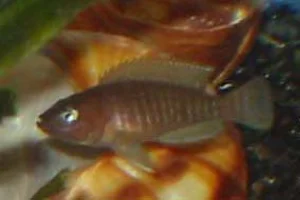
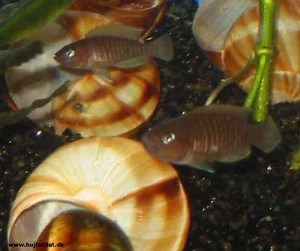
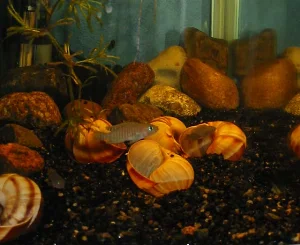
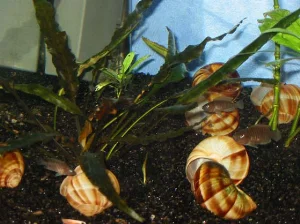
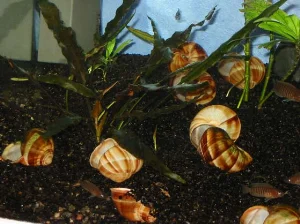
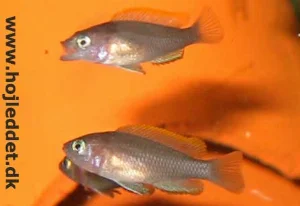
Neolamprologus multifasciatus was my first encounter with shell-dwelling cichlids. After a rocky start with transport issues, I managed to establish a thriving colony. My local dealer jokingly called them the 'Guppies of Lake Tanganyika,' and he was right—they are incredibly prolific and fascinating to watch.
Behavior and Tank Setup
Known as one of the smallest cichlids in the world, they make up for their size with immense personality. They are often called 'bulldozers' because they tirelessly rearrange the substrate to position their shells. In my 20-liter tank, I kept 8-10 adults. A thick layer of fine sand and an abundance of snail shells (such as escargot or vineyard snail shells) are essential. You will soon observe males establishing harems, with each female occupying her own shell within his territory.
Breeding and Fry Care
Once settled, new fry regularly appear around the shells. While the parents are protective, some predation can occur within a dense colony. I had great success moving the fry to a separate 20-liter grow-out tank once they reached a certain size, allowing for heavy feeding and faster growth. They are typically ready for the local fish store once they reach about 2.5 cm.
Habitat and Water Parameters
In the wild, they inhabit vast shell beds in Lake Tanganyika. To thrive in captivity, they require hard, alkaline water with a $pH$ between 8.0 and 9.0 and temperatures ranging from 24-28°C. They are ideal for small species-only setups. For a similar species, check out my article on Neolamprologus similis.