Introduction and Habitat
Heterandria formosa, commonly known as the Least Killifish, is a true minimalist of the fish world. It is the smallest livebearing toothcarp and ranks among the smallest vertebrates on Earth. Native to the southeastern United States—ranging from North Carolina to Florida and west to Louisiana—it typically inhabits shallow, stagnant waters in swamps, ditches, and the dense vegetated margins of lakes. As an aquarist, it is fascinating to observe a fish that has mastered the art of survival alongside much larger predators by simply being too small to be noticed and utilizing the finest micro-habitats.
Behavior and Social Structure
This is an incredibly peaceful and discreet fish. While they do not school in the traditional sense, they display complex social dynamics when kept in groups. Males are significantly smaller than females and spend much of their time courting them with quick, darting movements. They are not aggressive, though males may maintain small, discrete territories in a heavily planted setup. They are excellent for nano tanks, as they constantly graze on algae and biofilm, acting as a small but effective cleaning crew.
Aquarium Conditions and Care
To thrive, H. formosa requires a tank with plenty of visual cover. Fine-leaved plants such as Taxiphyllum barbieri (Java Moss), Ceratophyllum demersum (Hornwort), and floating plants like Salvinia are ideal. Water flow should be kept to an absolute minimum. They are remarkably hardy regarding temperature fluctuations and can even be kept outdoors during summer months, but 20-24°C (68-75°F) is ideal in an indoor setup. Water should be neutral to slightly alkaline (pH 7.0-8.0) with moderate hardness. Given their tiny mouths, food must be appropriately sized; crushed flake food is accepted, but they truly flourish on live Artemia nauplii or microworms.
Breeding – A Unique Strategy (Superfetation)
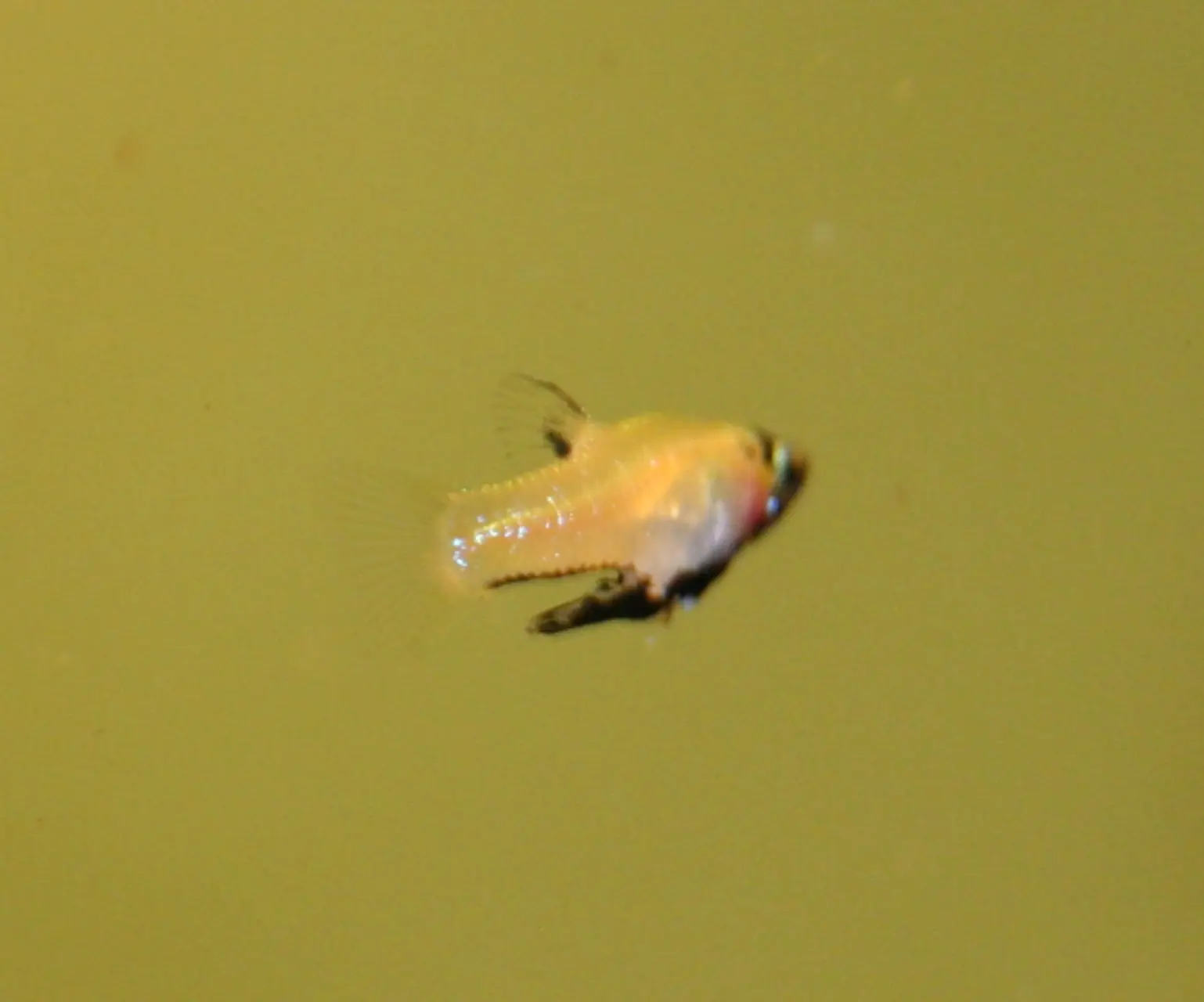
Breeding this species is one of the most rewarding experiences for an aquarist. Unlike most livebearers that drop a large brood every four weeks, H. formosa utilizes a strategy called superfetation. This means the female carries embryos at different stages of development simultaneously. The result is a continuous "conveyor belt" of 1-3 fry born almost daily or every few days. The fry are surprisingly large at birth and capable of foraging immediately. In a densely planted tank, the survival rate is high even without removing the parents.
Personal Experience
In my own tanks, I've found this fish to be the perfect resident for small 20-30 liter setups where other fish would feel cramped. Provide plenty of moss, and you will soon notice your tank teeming with life of all sizes due to their unique reproductive cycle.